
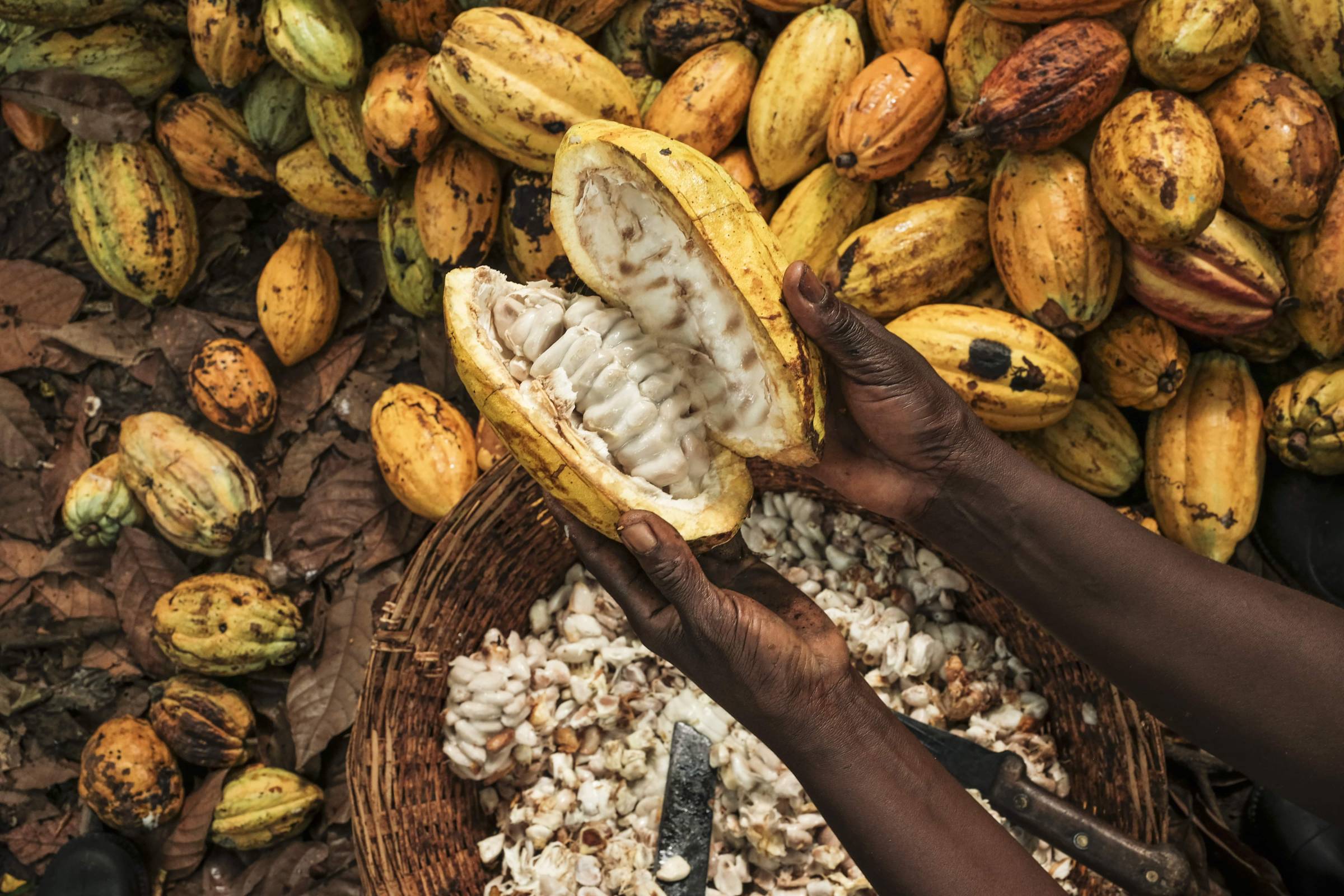
Bean to bar

Lindt & Sprüngli is a chocolate manufacturer that produces its own cocoa mass from the cocoa beans it sources (excluding Russell Stover). This allows us to oversee the production process from the selection and sourcing of cocoa beans to the production of cocoa mass, also known as cocoa liquor, and the finished product – “from bean to bar.”
The Lindt & Sprüngli bean to bar approach


1. Cocoa production
Cocoa farmers harvest the beans by hand. After harvesting, the cocoa beans are fermented and dried in the country of origin. Depending on the region and country, Lindt & Sprüngli partners with suppliers who work directly with cocoa farmers. Long-term collaboration with strategic cocoa suppliers, which are committed to partnering and working with Lindt & Sprüngli to deliver on the Lindt & Sprüngli Farming Program, is crucial in our approach.

2. Processing or transportation
Once the cocoa beans are dry, they are either processed into butter and powder in the country of origin or transported by ship to destination ports in Europe and the USA for further processing.


3. Cocoa mass factories
The beans are loaded and transported to our own cocoa mass factories in Europe and the USA, which are all certified to ISO 22000 Food Safety Management standard (excluding Russell Stover).


4. Mixing of recipies
The delivered cocoa beans are stored in silos before being mixed for the recipes. They are then cleaned through infrared treatment.


5. Steaming of nibs
The cocoa beans are cracked open and the shell removed. The remaining cocoa fragments, known as nibs, undergo further processing before being steam-cleaned again.

6. Roasting of nibs
The nibs are then roasted by applying a process we specially developed to ensure the roasting time and temperature are perfectly aligned in order to achieve the desired aroma.

7. Grinding of nibs
Next, the nibs are crushed and ground in special mills until the cocoa mass reaches the desired particle size.

8. Cocoa mass
The cocoa mass is transported to our production sites.

At this point, the conventional chocolate manufacturing process begins...

9. Mixing with other main ingredients
Other ingredients, such as milk powder and cocoa butter, are added to the cocoa mass and refined into chocolate.
10. Grinding of cocoa mass
The cocoa mass is ground again.

11. Conching
Then comes the important step – conching.

12. Molding or further processing
The chocolate mass is formed or processed further.