
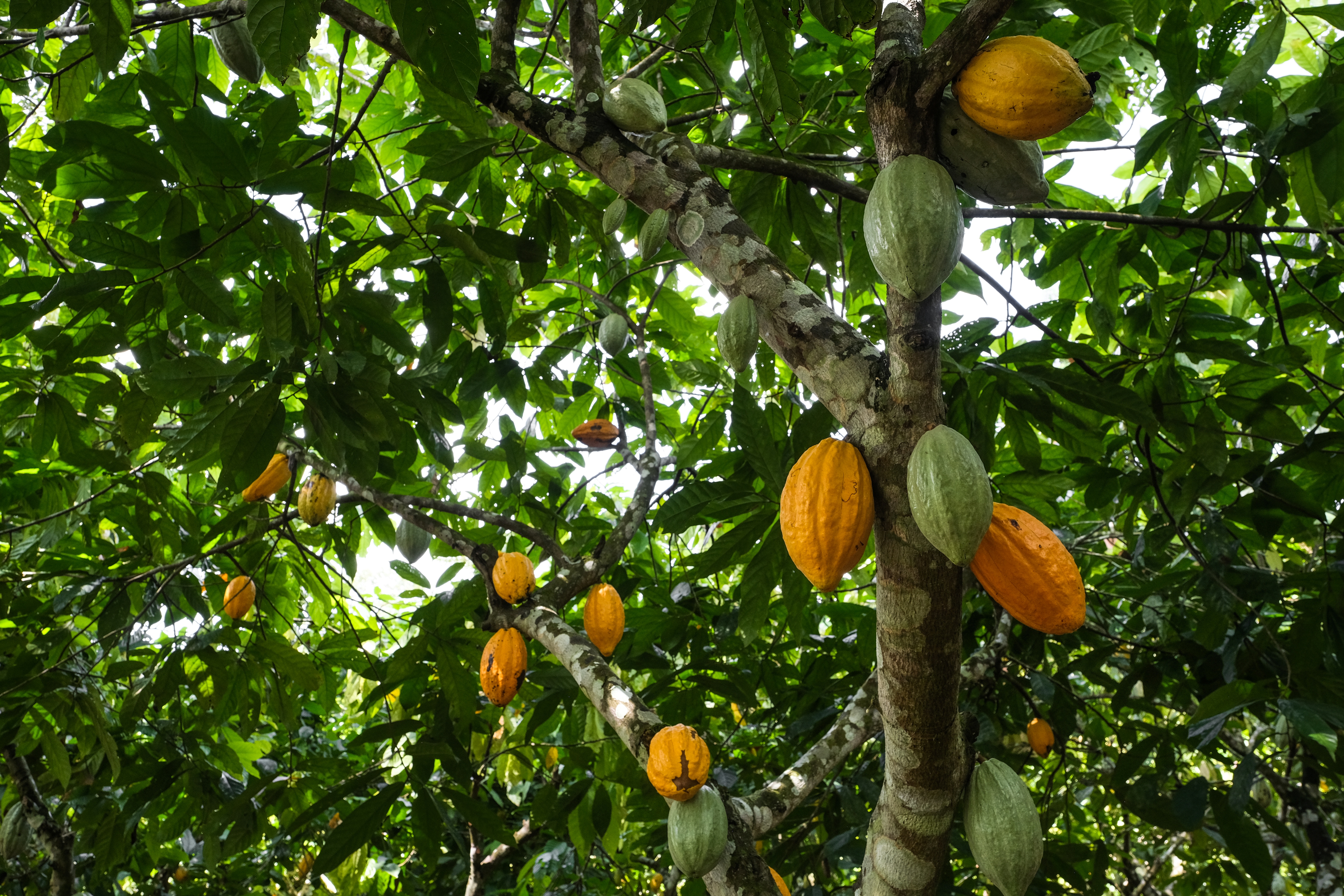
Promote Good Farming Practices and biodiverse landscapes
We work to protect and conserve the natural ecosystems we rely on for raw materials. This includes promoting Good Farming Practices (on-farm) and financing ecosystem conservation and restoration within priority cocoa landscapes beyond farm boundaries (off-farm).

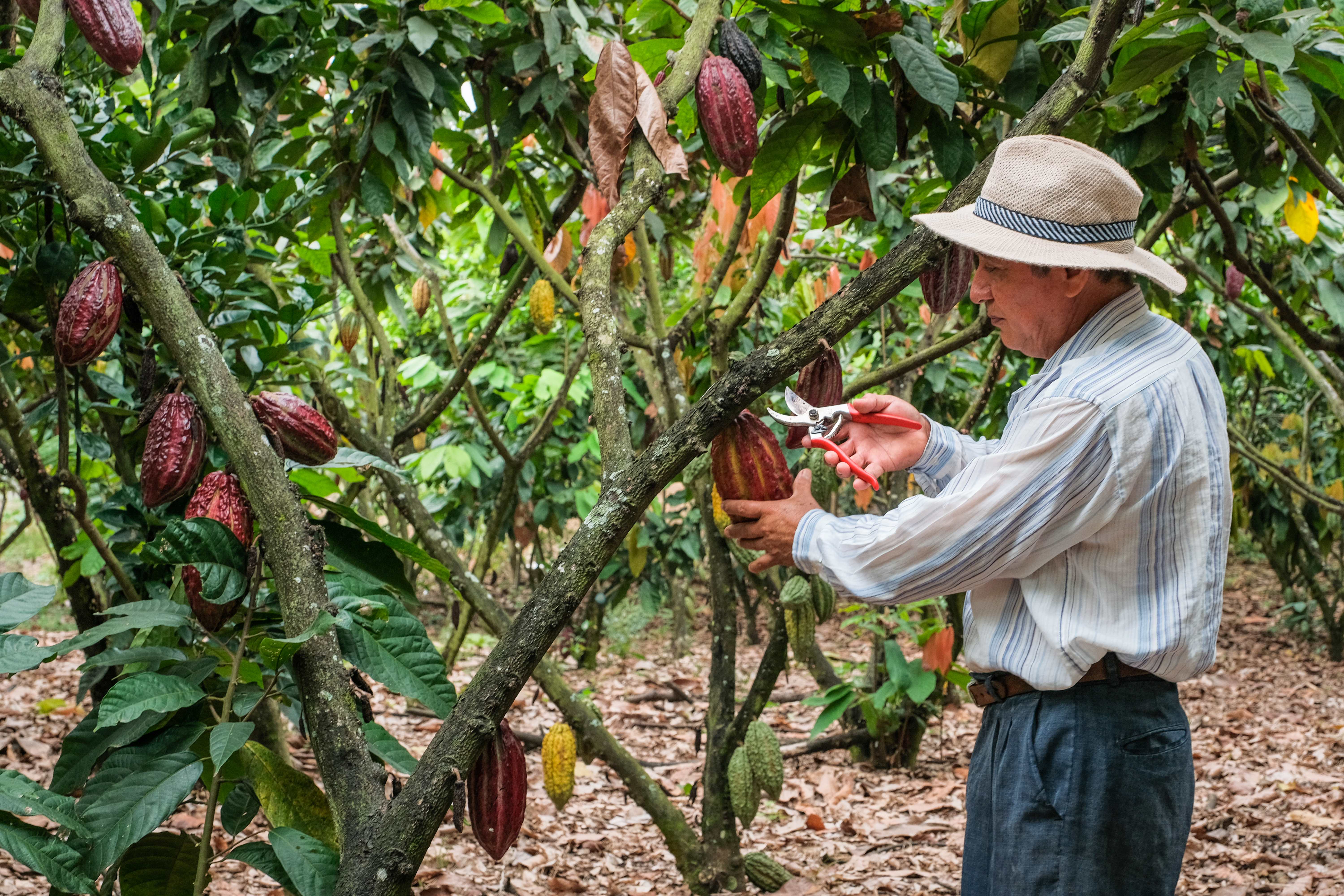
Promote Good Farming Practices
Our commitment
We commit to reduce absolute scope 3 FLAG greenhouse gas emissions by 30.3% by 2030 and by 72% by 2050 from a 2020 base year.
We commit to working towards no deforestation in cocoa and our other primary deforestation-linked supply chains (palm oil, soy, and pulp- and paper-based packaging).
We aim to support the establishment of 20,000 hectares of advanced agroforestry between 2025 and 2030.
Our approach
Promoting Good Farming Practices helps to reduce carbon emissions, develop cocoa landscapes that are more resilient to environmental stress, while supporting farmers to improve their livelihoods. Cocoa production accounts for the largest share of our carbon footprint, primarily due to historical land-use change, which makes Good Farming Practices a critical lever for Lindt & Sprüngli in meeting its near- and long-term emissions reduction targets.


To reduce our greenhouse gas emissions in cocoa production, we work to strengthen traceability, reduce emissions related to land-use change by implementing our No-Deforestation Policy, and fund programs with the aim to support farmers to improve land management and transition to agroforestry systems.
In 2025, 59.8% of our total cocoa volumes (beans equivalent) were sourced as deforestation-free according to our methodology. Of the remaining cocoa, 39.8% is Rainforest Alliance Certified with at least a Mass Balance traceability type, and just 0.5% was not covered by the defined Responsible Sourcing Standard for cocoa. Our methodology to determine whether the deforestation risk is sufficiently low to deem a raw material sourced as deforestation-free is described in our No-Deforestation Guidelines. Since 2024, overall cocoa emissions decreased by 10%. Access our latest Sustainability Statement to learn more about our scope 3 greenhouse gas emissions.

Support biodiversity conservation in target landscapes (off-farm)
Our commitment
We aim to support the restoration of 20,000 hectares of forests between 2026 and 2030.
We aim to support five landscape initiatives for forest conservation between 2026 and 2030.
Our approach
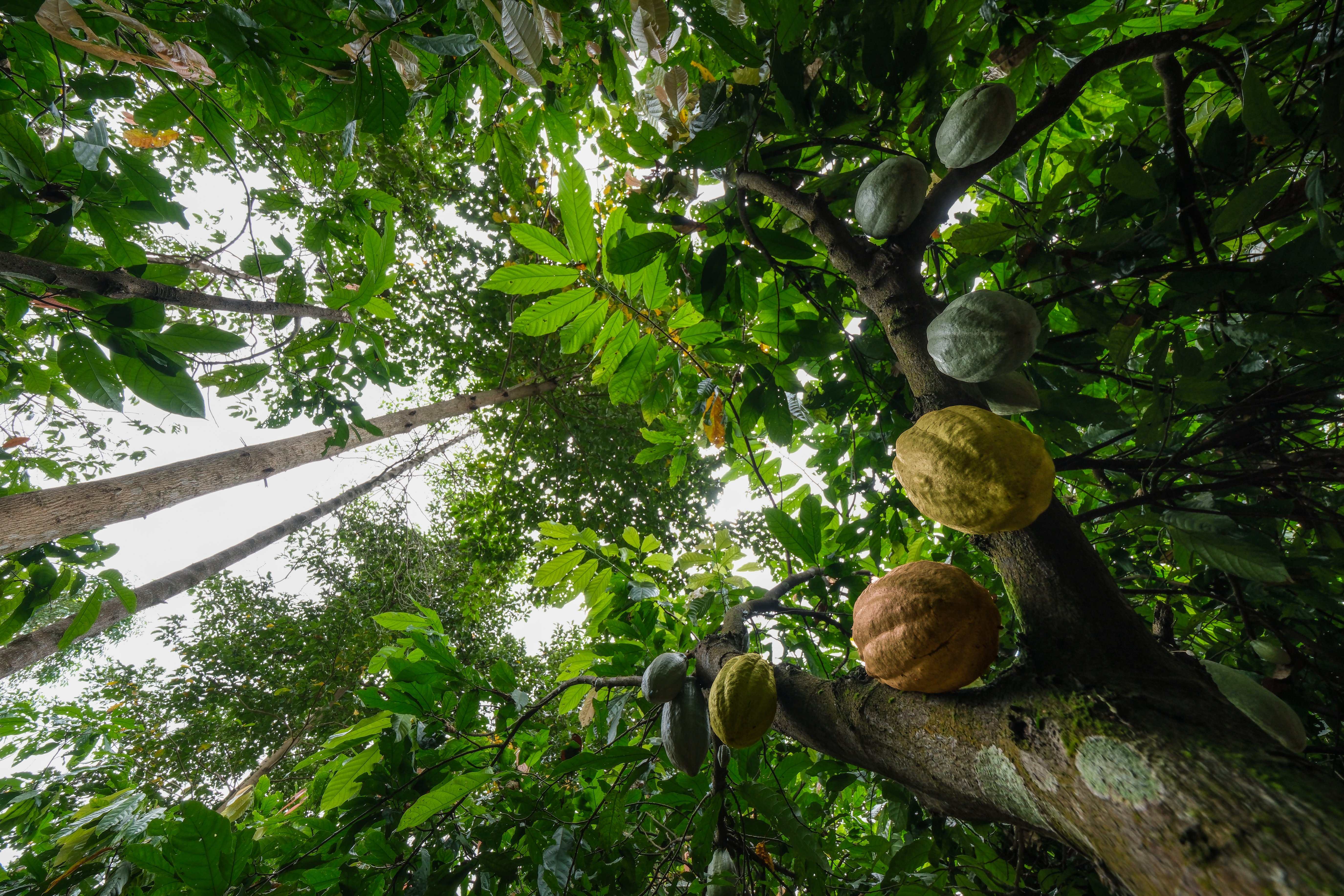
Forests in cocoa farming landscapes support biodiversity and provide key ecosystem services that help cocoa production and can contribute to improved local livelihoods. These areas face pressures from land-use change driven by agricultural expansion and resource use, which cannot be addressed by individual farmers or companies alone.
To help reduce risks of future deforestation and promote biodiverse landscapes, Lindt & Sprüngli engages in collaborative approaches that extend beyond farm boundaries. Through the Lindt & Sprüngli Farming Program, we participate in landscape initiatives that bring together communities, governments, cocoa sector stakeholders, and NGOs to develop and implement shared environmental goals and long-term plans. Together we focus on target landscapes based on their importance for cocoa sourcing and their conservation value.
These landscape initiatives support efforts aimed at forest conservation and restoration, recognizing that healthy forests contribute to ecosystem services such as soil fertility, pollination, water availability, and pest and disease control. These elements are vital to agricultural productivity and resilience against climate change. Effective landscape initiatives require strong governance and active community involvement to foster local stewardship of natural resources.
Access the Farming Program 2026-2030 document for more information on our core initiatives to promote Good Farming Practices and biodiverse landscapes.